
Designing HOA Clubhouse Entrances That Lead to Community Pools: Glass Door Options Explained

When summer rolls around and your community pool becomes the neighborhood hotspot, that clubhouse entrance sees some serious action. Families shuffling through with pool noodles, kids dripping wet from cannonball practice, and residents checking in for their afternoon swim. Your HOA clubhouse storefront glass doors need to handle it all while looking great and staying functional.
If you’re on an HOA board or managing a community property, understanding your options for clubhouse doors leading to your pool can save you headaches (and budget dollars) down the road. Let’s break down what you need to know.
What You'll Learn
Keep your pool entrance looking great and working hard—without the stress!
Why Are Glass Storefront Doors Ideal for HOA Clubhouses?
Glass storefront doors create an inviting, open feel that makes any clubhouse look modern and welcoming. Beyond aesthetics, these entrance systems offer practical benefits that work perfectly for community spaces.
Commercial glass doors let in natural light, reducing the need for artificial lighting during daytime hours and improving energy efficiency. Residents can see activity in the pool area before they even step outside, which builds excitement and encourages community engagement. Plus, that transparency works both ways; staff and lifeguards can monitor who’s coming and going without obstruction.
Glass storefront systems for HOAs also give your property a polished, professional appearance that reflects well on the entire community. When prospective buyers tour the neighborhood, that sleek glass entrance makes a strong first impression.
What Makes Pool Entrance Doors Different From Standard Commercial Entrances?
Community pool entrance doors face unique challenges that typical commercial storefront setups don’t encounter. Moisture, chlorine exposure, heavy foot traffic, and constant opening and closing during peak swim season all take their toll.
Standard commercial door installations might work fine for an office building, but pool facility glass entry systems need:
- Corrosion-resistant hardware that won’t rust or degrade from pool chemicals
- Non-slip thresholds for wet feet tracking water inside
- Durable weather seals to prevent water infiltration
- Heavy-duty hinges and closers rated for high-cycle use
These specialized requirements mean you can’t just grab any off-the-shelf aluminum storefront door and call it a day.
How Do Glass Doors Improve Safety and Visibility Between Clubhouses and Community Pools?
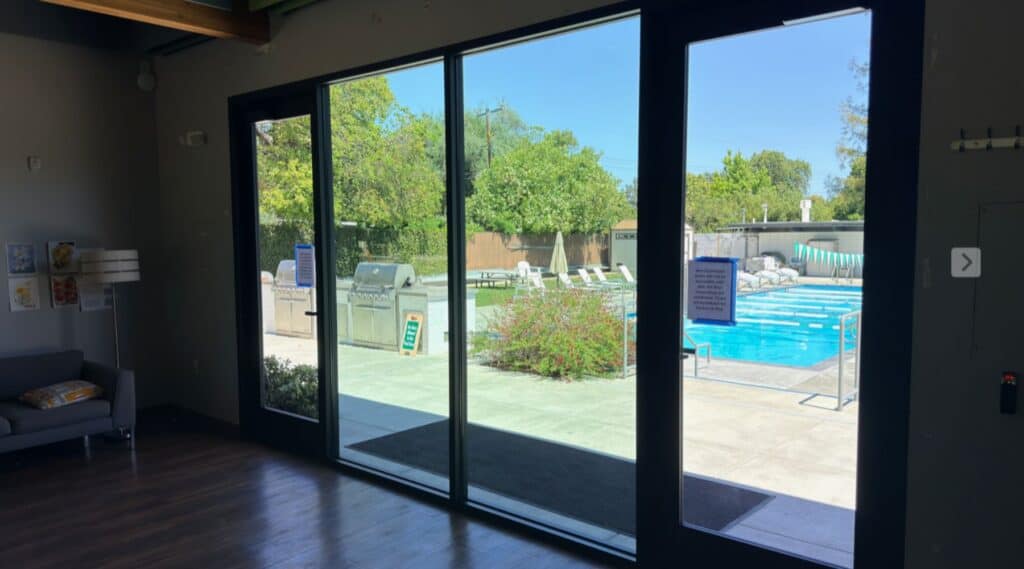
Clear sightlines between your clubhouse and swimming pool create a safer environment for everyone. With glass entry points, lifeguards can see approaching swimmers, parents can keep eyes on kids from inside, and staff can spot potential issues before they escalate.
Sliding glass doors and entry doors with full-length glass panels eliminate blind spots that solid doors create. This visibility helps with:
- Emergency response: staff can quickly assess situations in either direction
- Access control: you can see who’s approaching before unlocking
- Child safety: parents maintain visual contact while grabbing snacks or using restrooms
- Security monitoring: suspicious activity becomes harder to hide
During those busy summer weekends when every family in the community seems to be at the pool, that visibility becomes invaluable.
What Features Should HOA Pool Entrance Doors Include?
When you’re planning your pool clubhouse entrance renovation, your HOA clubhouse storefront doors should incorporate these specific features:
- Tempered safety glass that meets commercial building codes
- ADA-compliant hardware including proper handle heights and opening force
- Automatic door closers to maintain climate control and security
- Kick plates to protect against damage from pool equipment and strollers
- Impact-resistant glazing in areas prone to rough handling
Consider sliding doors for high-traffic areas where swing clearance might create bottlenecks. When twenty families are trying to enter for the neighborhood swim meet, every inch of pathway matters.
Many HOA boards also find that a pull lobby system adds valuable functionality to their entrance design. This configuration features two sets of doors—an exterior entry and an interior entry—with a vestibule between them. Residents enter the outer doors, check in or swipe access cards in the secured lobby, then proceed through the inner doors to reach the pool deck.
This setup prevents unauthorized access while giving staff a clear checkpoint, and that vestibule acts as an airlock that keeps conditioned air from rushing out every time someone opens a door. Over the course of a busy pool season, this translates to real savings on HVAC costs while maintaining better security and access control.
What About Privacy? Frosted Glass Options for Clubhouse Spaces
While clear glass works perfectly for pool-facing entrances, some clubhouse areas benefit from frosted glass or privacy glass options. Think about locker rooms, restrooms, office spaces, or meeting rooms within your facility. These spaces need natural light without full transparency.
Privacy glass solutions offer the best of both worlds. You get that bright, open atmosphere while maintaining appropriate separation for sensitive areas. This approach mirrors what you’d find in upscale hotel lobbies, where frosted panels create elegant visual barriers without making spaces feel closed off or dark.
For HOA clubhouses, consider frosted glass in:
- Restroom vestibules adjacent to main entrance areas
- Management offices where private conversations happen
- Changing areas near pool access points
- Storage rooms visible from main corridors
The glass still lets light pass through, keeping your clubhouse feeling spacious and welcoming while respecting residents’ privacy where it matters.
How Do Modern Storefront Systems Handle Heavy Resident Traffic and Wet Conditions?
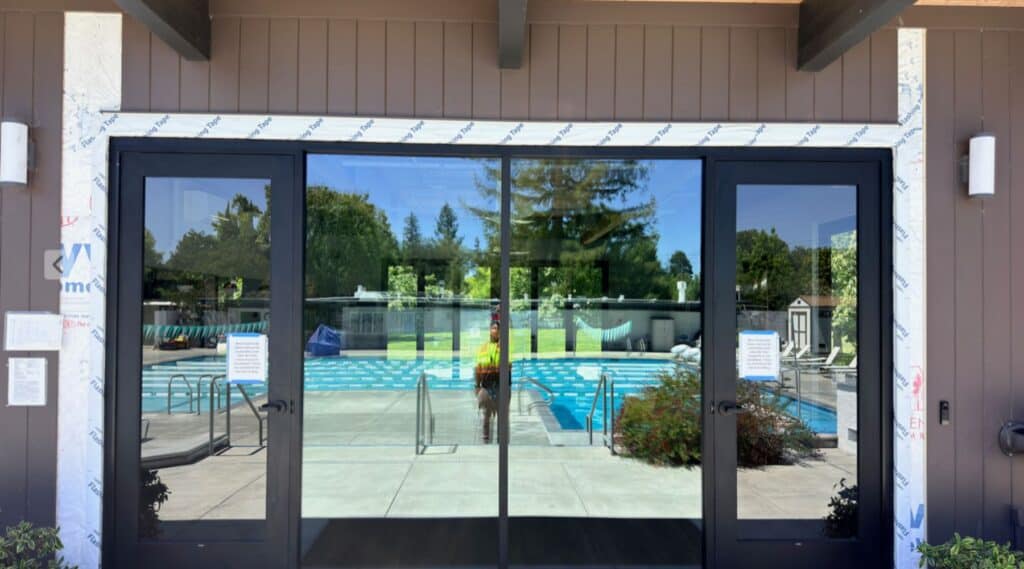
Today’s high-traffic glass entry systems are engineered for exactly these conditions. Quality glazing systems feature drainage channels built into the frame design, directing water away from moving components and preventing pooling at thresholds.
Commercial aluminum storefront doors with thermal breaks prevent condensation buildup, while heavy-duty weather stripping keeps moisture from infiltrating interior spaces. Modern storefront system designs also incorporate:
- Stainless steel hardware that resists chlorine corrosion
- Quick-draining threshold systems
- Anti-microbial coatings on high-touch surfaces
- Reinforced corners and edges where impact damage commonly occurs
When Should an HOA Repair Existing Doors Versus Replace the Entire Storefront System?
Repair makes sense when damage is isolated, like with a broken closer, worn weather seals, or a single cracked panel. However, replacing your entire storefront system becomes the smarter investment when you’re dealing with:
- Multiple failing components requiring frequent service calls
- Outdated frames that no longer meet current building codes
- Chronic water infiltration that repairs haven’t resolved
- Visible corrosion in the aluminum framework
- Energy inefficiency from older single-pane designs
If you’re scheduling repairs every few months, that money often serves you better toward a complete community clubhouse renovation with modern entrance systems.
How Can New Glass Entrances Improve Property Value and Resident Experience?
Updated glass storefront doors immediately elevate how residents and visitors perceive your community. Modern commercial glass doors for pool areas signal that the HOA takes property maintenance seriously, which is a factor that directly influences home values within the association.
Beyond curb appeal, new glass entrance installations improve daily life for residents through smoother operation, better climate control, and enhanced security features. That’s the kind of upgrade people notice and appreciate.
Why Should HOA Boards Partner With an Experienced Commercial Glazing Contractor?
Working with specialists who understand glazing systems specific to pool areas ensures your investment performs as expected. At Central Glass Industries, we’ve been serving the Bay Area since 1983, bringing crystal-clear solutions to communities throughout Newark, Fremont, San Jose, and surrounding areas.
Our certified technicians follow industry best practices for every pool facility glass entry system project, and we stand behind our work with a 100% satisfaction guarantee. Whether you’re exploring HOA clubhouse storefront doors for a new construction project or planning a pool clubhouse entrance renovation, our team combines cutting-edge technology with time-honored craftsmanship to deliver results that exceed expectations.
Ready to discuss your clubhouse entrance project? Contact Central Glass Industries to schedule a consultation and let us bring clarity to your vision.
Serving Newark, Palo Alto, Fremont, Union City, Milpitas, Hayward, and surrounding cities for over 40 years, we’re your trusted partner for everything from windows and doors to custom railings, mirrors, and shower enclosures. No project is too big or too small—whether you’re upgrading your windows for energy efficiency or enhancing your interiors with custom glass, our in-house team of experts will bring your vision to life.
We are licensed, bonded, & insured | California Contractor’s License #908623
Frequently Asked Questions
What type of glass doors are best for HOA clubhouses?
Commercial aluminum storefront doors with tempered safety glass typically work best for HOA clubhouses because they combine durability, security, and a clean modern appearance. For entrances leading to pool areas, look for corrosion-resistant hardware and frames designed to handle moisture exposure. These details make a real difference in how your doors perform over time.
When should an HOA replace storefront glass doors?
Consider replacement when you’re dealing with chronic water infiltration, visible frame corrosion, multiple failing components, or outdated single-pane glass that no longer meets energy codes. If your board is approving frequent repair invoices or residents are complaining about doors that stick, jam, or don’t close properly, investing in a full replacement often makes more financial sense than continued patchwork fixes.
What features should community clubhouse entry doors include?
Essential features include tempered safety glass, ADA-compliant hardware, heavy-duty automatic closers, and non-slip thresholds—especially important when wet feet are tracking water in from the pool. For high-traffic community spaces, also prioritize kick plates to protect against daily wear and weather seals that maintain climate control and keep your energy costs in check.